
 Verified Purchase





Bengal Kantha Embroidery: Why It Is More Than Just Embroidery
Introduction
Wearing Kantha is like embracing the story of craft and timeless beauty whispered from generation to generation. It is not just thread on fabric but heritage which is woven with memory and love.
At iTokri, the art of reconnecting people with their roots is our passion. Every piece of Bengal Kantha embroidery that we bring to you is a bridge between the glorious past and our present.
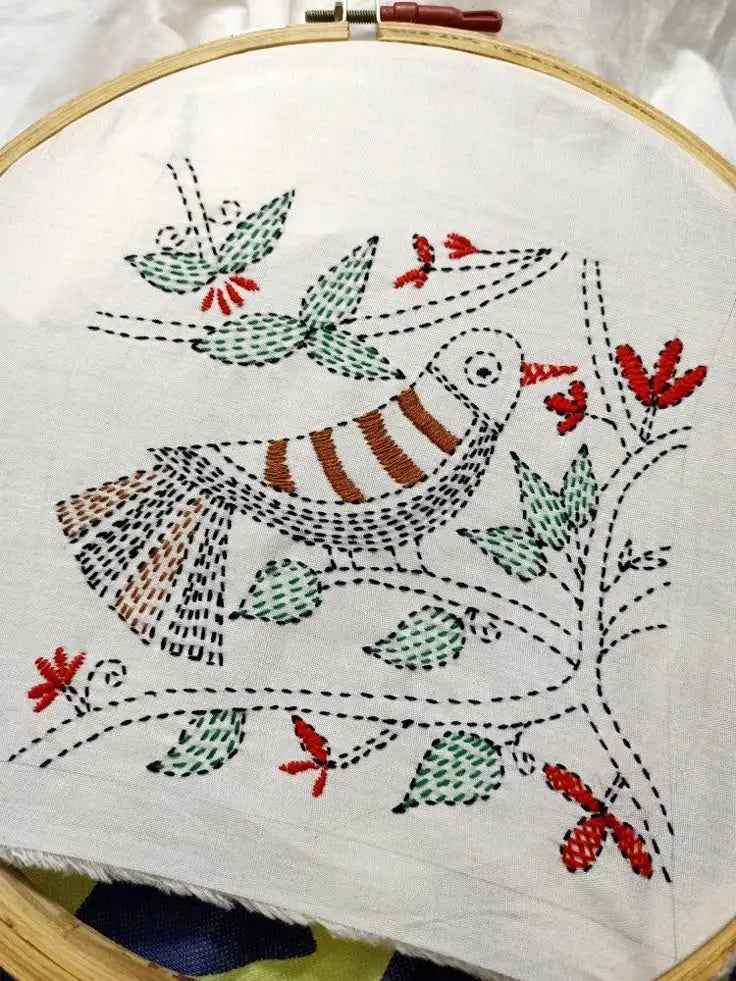
Image Credit:- in.Pintrest.com
What Is Bengal Kantha Embroidery
Bengal Kantha Embroidery is an age-old hand stitching tradition that is known to have originated from rural Bengal, and is well known for its running stitch.
The Kantha art of Bengal was traditionally practised by rural women who wished to repurpose old textiles into quilts, garments, etc. The word Kantha means patched cloth, and this form of embroidery is dedicated to the art of revival, where faded pieces of fabric are converted into gorgeous pieces of art, apparel, etc.
The modern adaptations of Kantha continuously appear in different forms of sustainable fashion like hand-stitched quilts, jackets, stoles, dupattas for women, and even home decor. Yet, the heart and soul of every piece remains in patience, purpose, and love.
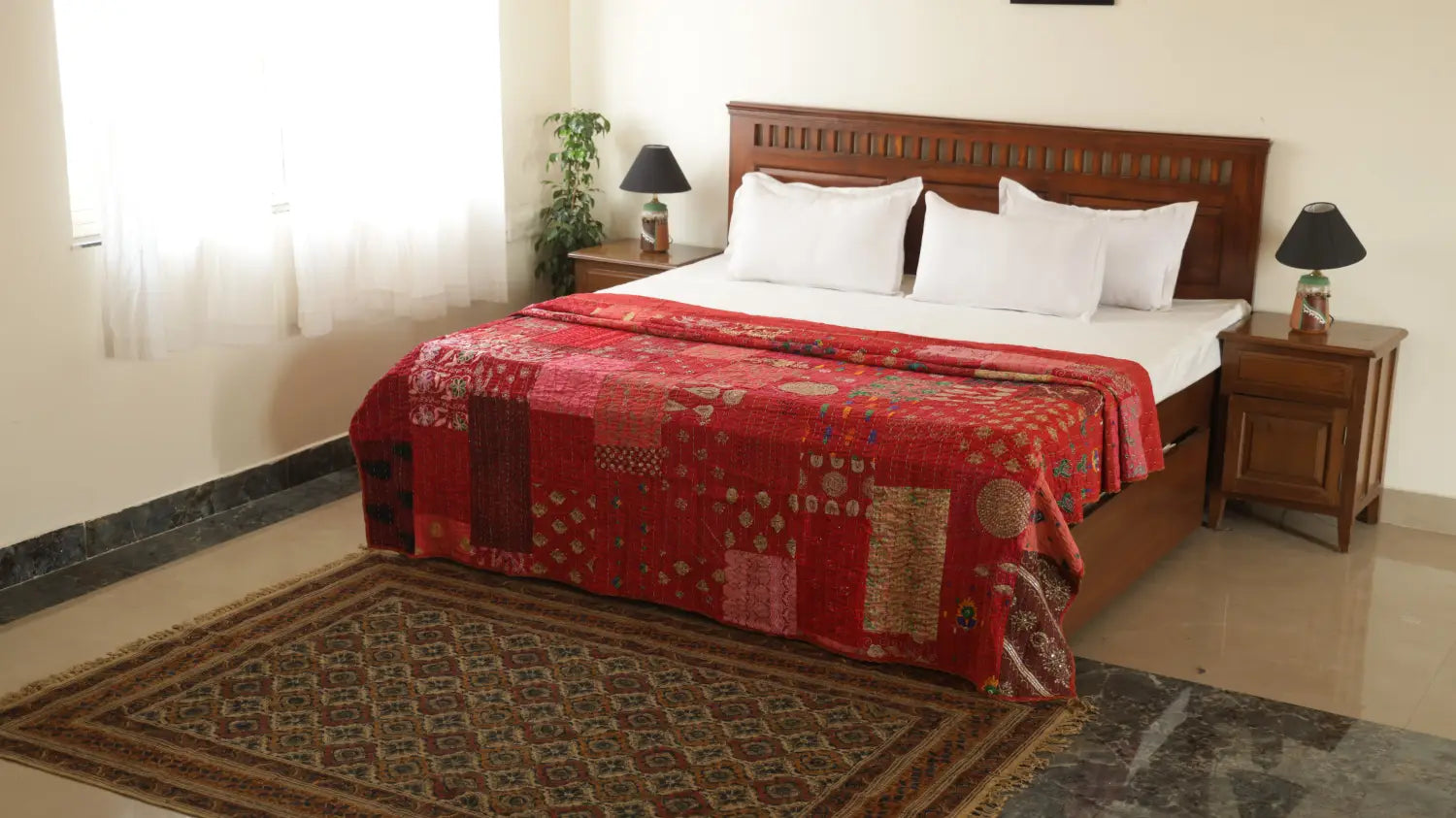
Rich History Of Bengal Kantha Embroidery
The Kantha Art of Bengal is truly a living tradition. What began as a humble practice by rural women, has over time evolved into an iconic representation of Indian textile heritage that is celebrated both in India and across the globe:
● The Kantha Stitch History
Kantha embroidery was born almost 500 years ago. It was a labor of love, necessity, and sentiment. Women used running stitches to patch together old garments as a way of judiciously utilizing their resources. The term Kantha means patched cloth. It is a symbol of reuse, renewal, and resilience. The motifs used in the Bengal Kantha embroidery draw inspiration from daily life, folklore, nature, and mythology.
● The women's power behind Kantha embroidery
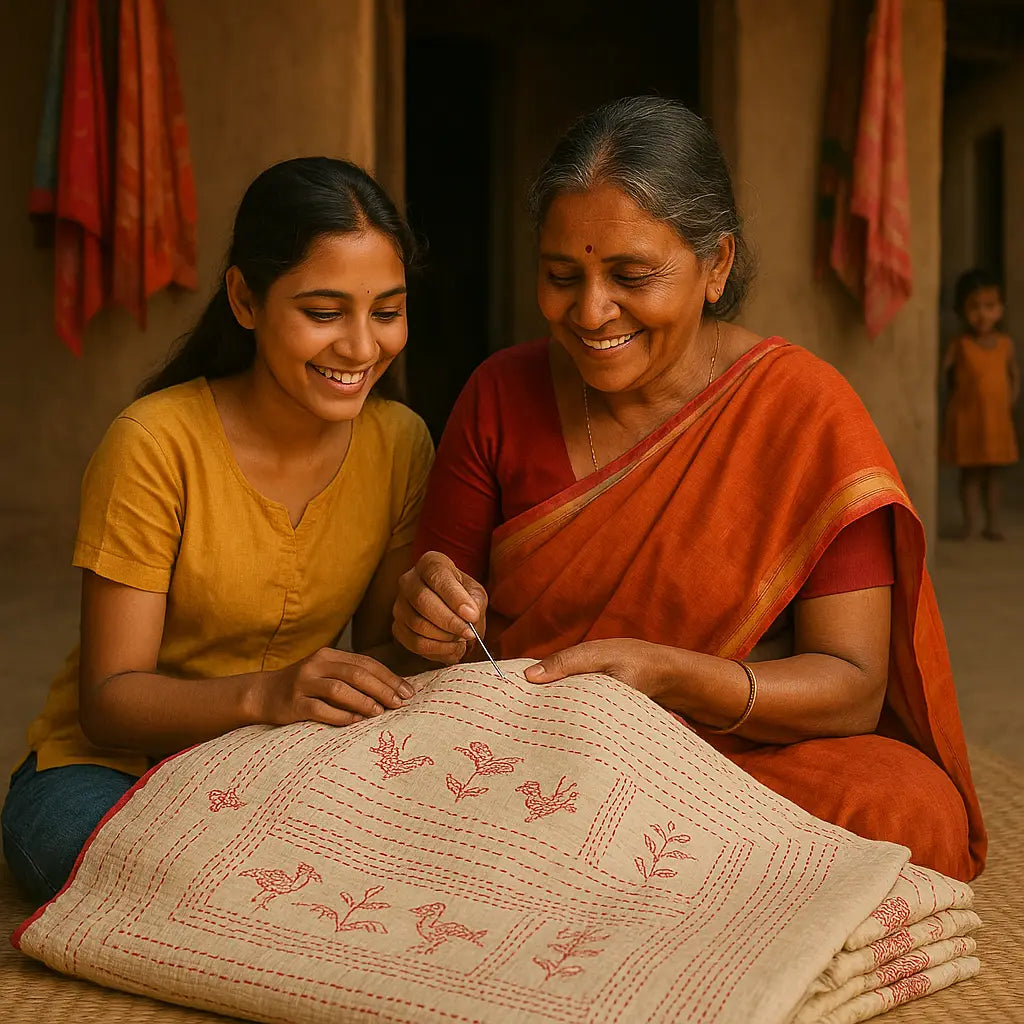
This form of embroidery has always been led by a family of women who used to gather in courtyards, sew, stitch, and share stories all at once. You can think of Kanta as a sisterhood of thread, where each woman leaves her story and skill in every motif.
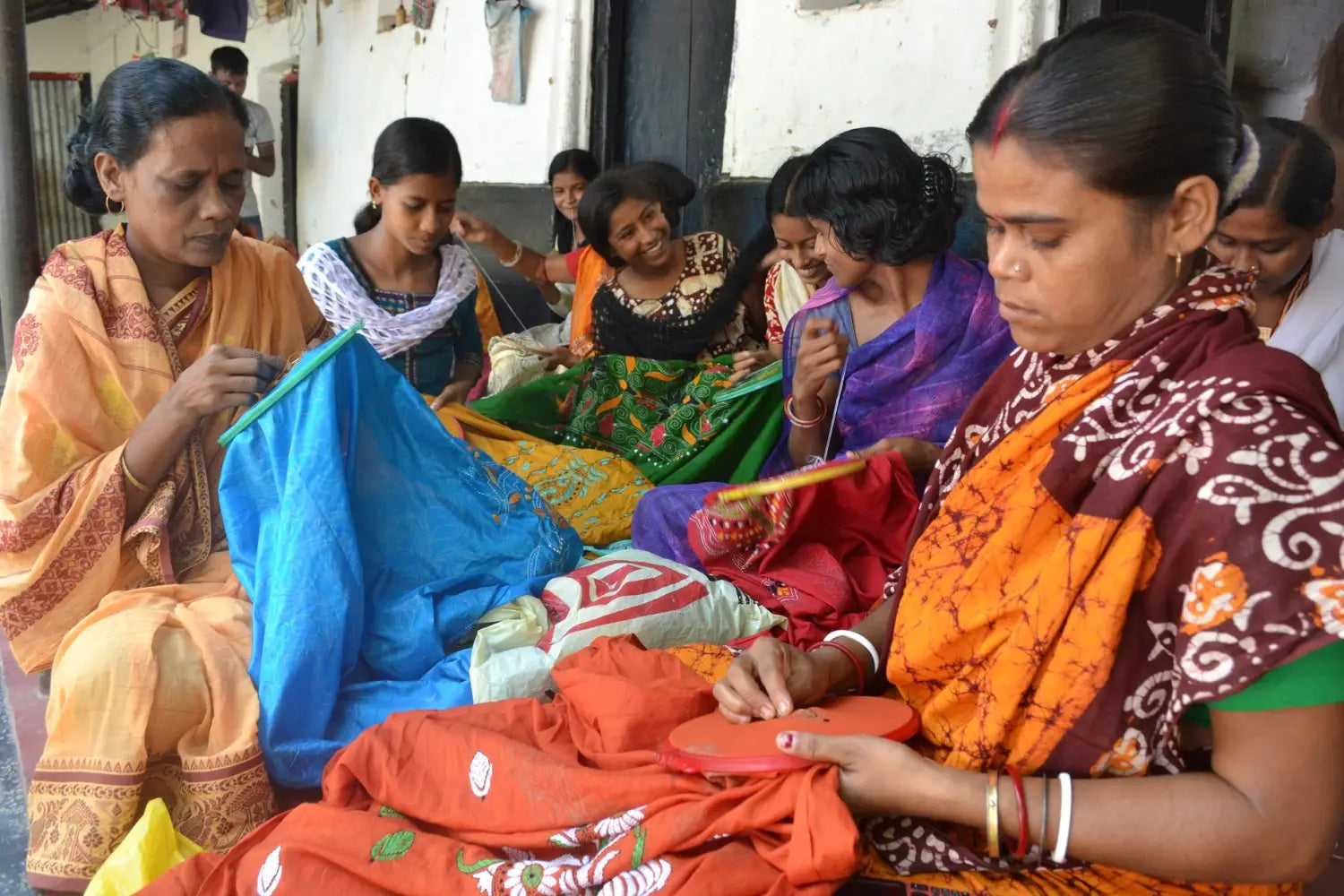
Image Credit:- The Better india
Various Patterns, Motifs & Stitches Of Bengal Kantha Embroidery
Well-known for its intricate needlework, Kantha's stitch reflects the cultural significance of Bengal's textile heritage.
Patterns
Take a look at different katha motifs and their symbolism.
● Floral patterns are a symbol of fertility and prosperity.
● Animal motifs draw inspiration from elephants, peacocks, and fish. They signify strength, beauty, and abundance.
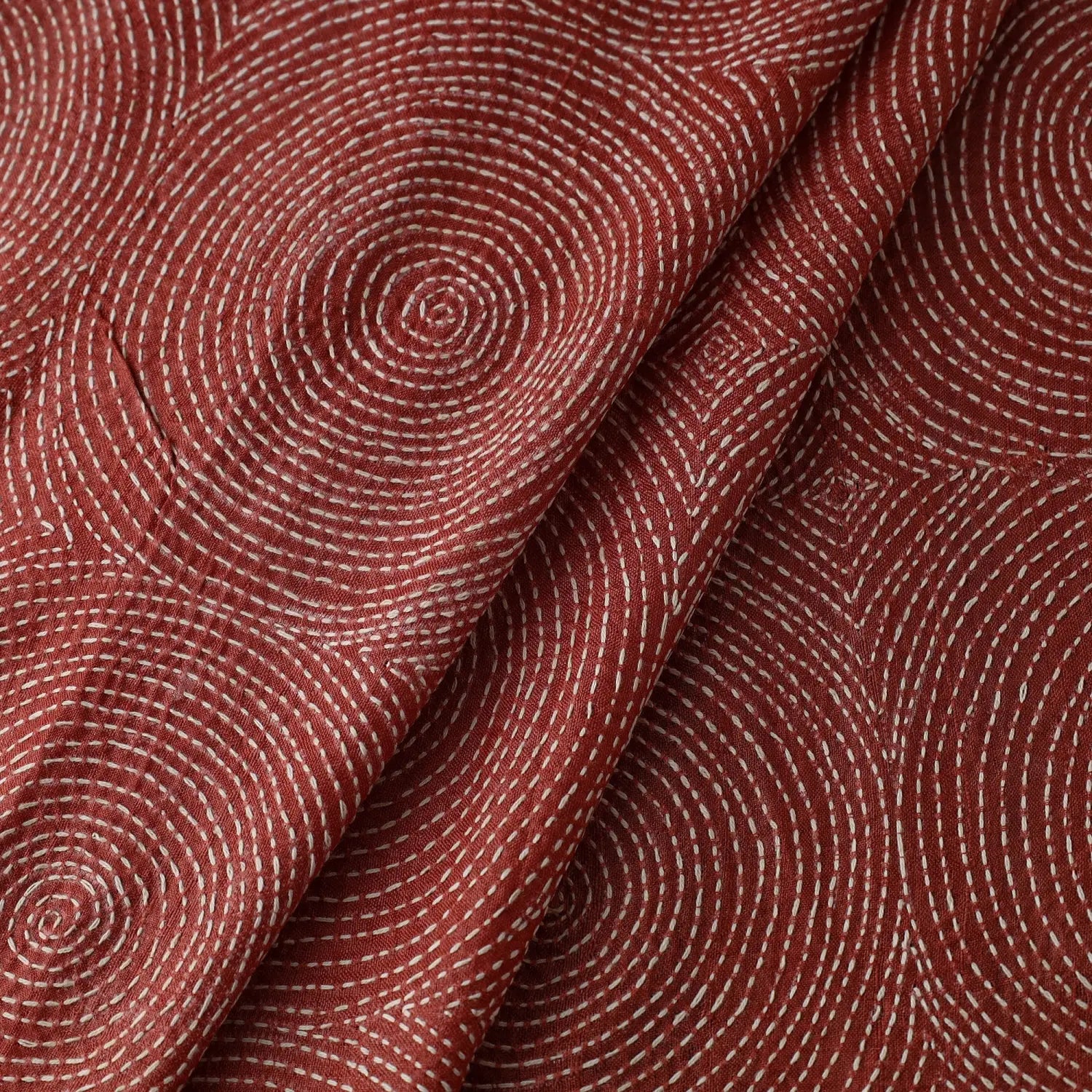
● Geometric motifs, such as diamonds and circles, personify unity and continuity.
● Then, there are narrative motifs that are inspired by daily life, folklore, and mythology.
Motifs
Originating in the rural areas of Bengal, India, Kantha embroidery is a unique threadwork. The stitches are simple, with a distinctive technique. Women sit together after finishing their housework, sing and create these simple patterns. They try to capture the natural beauty of Bengal through threads. There are various forms of stitches in this embroidery style.
Sada Kantha
This is the simplest form of Kantha stitch. In this form, minimal decorative elements are used while creating threadwork.
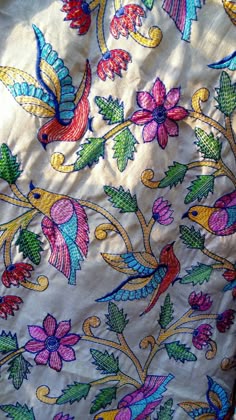
Image credit:- Pintrest
Lep Kantha
It is a form of layered embroidery work where multiple fabrics are placed together. It is used for making quilts from old fabrics with running stitches.
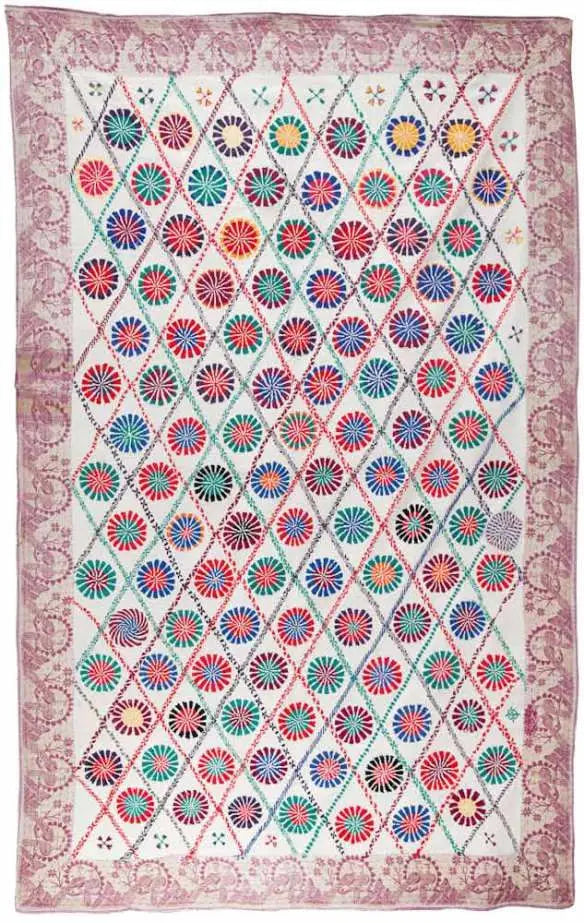
Sujani Kantha
This is the storytelling form of embroidery, where Ramayana and Mahabharat are the themes. It also has lotus, bees, animals, and such elaborate embroidery.
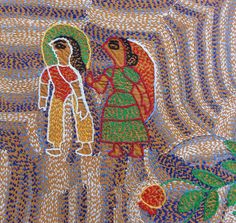
Image credit:- Pintrest
Bodhna kantha
In this form of embroidery, geometrical and abstract patterns are used. Bright-coloured threads, circles, diamonds, and squares are created on fabric.

Apart from these, there is Angla Kantha, Durga Kantha, Bajan Kantha, and a few others. This ancient form of threadwork is passed down through generations. It is a great way to repurpose old fabrics and add life to it. Now, Kantha embroidery is used for creating home décor items and fabrics.
In this art form, simple stitches with bright-coloured fabric add contrast to the fabric. Sometimes a black thread outline with coloured patterns in between is used for making striking pieces. It is a simple yet captivating way of storytelling among rural women of Bengal and Orissa.
Stitches
The Kantha stitch is a simple running stitch. But when done repeatedly, it can create complex motifs and textures. Different regions in Bengal have their own interpretations and variations of the Kantha stitch and each interpretation has its own unique rhythm and symbolism.
Common stitch techniques
1. Running stitch
This is the foundation of the Kantha technique and is used in all patterns.
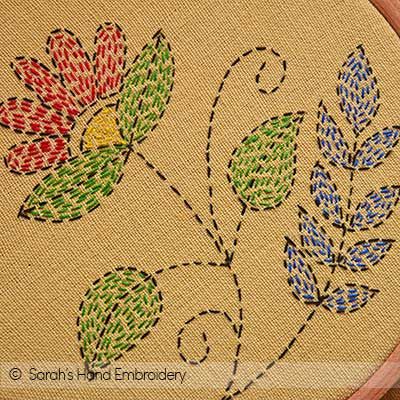
Image credit:- Pintrest/ Sarah's Hand Embroidery
2. Darning stitch
It creates bolder lines and dense filling, giving the fabric a very aesthetic appeal.
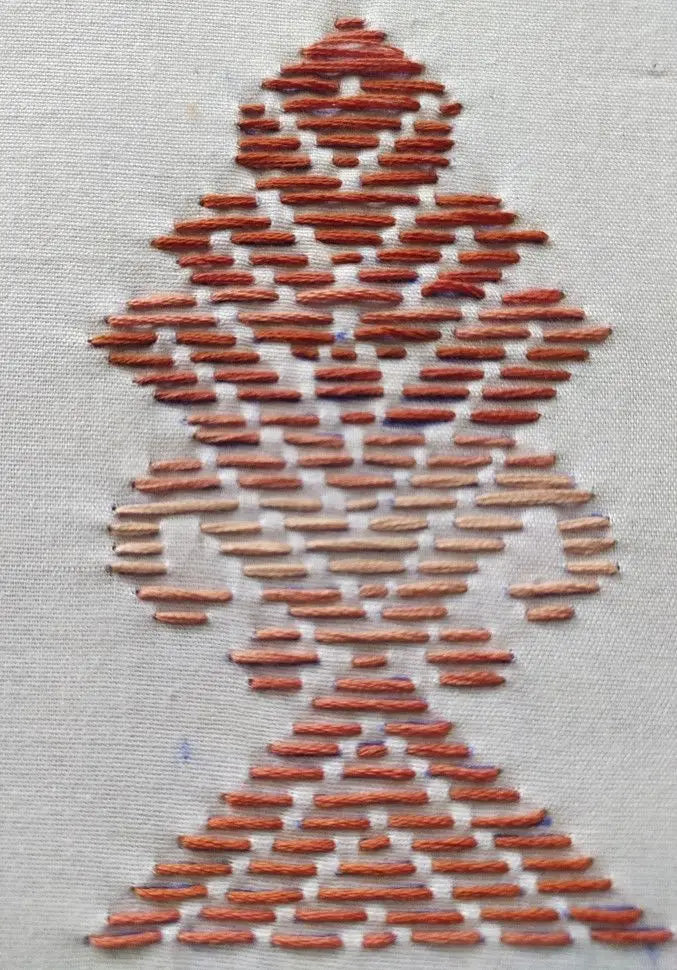
3. Whipped running stitch
It adds a nuanced and decorative detailing to the stitch. The whipped running stitch is well known for its raised texture.
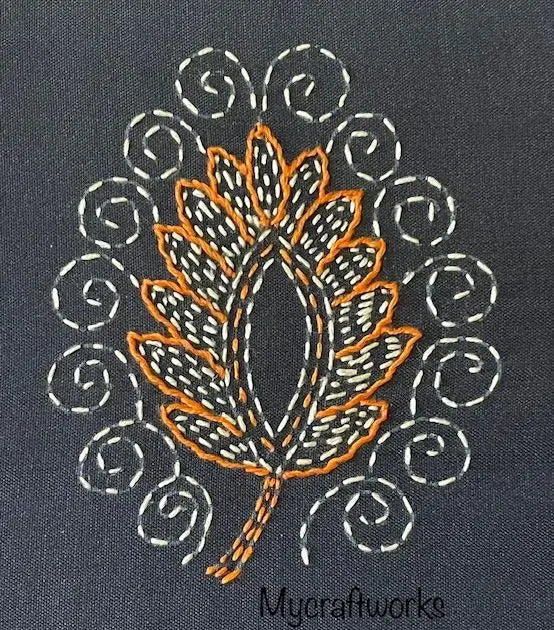
Ref: https://www.wanderingsilk.org/kantha-history-and-meaning
https://anuprerna.com/stories/kantha-embroidery/551
Step-by-Step Process Of Bengal Kantha Work Embroidery
The experience of wearing Bengal Kantha embroidery is like embodying the charm of our creative and artistic legacy. Every stitch tells a story of love, perseverance, and sustainability.
● Selecting the base
The craft of sustainable fashioning using Kantha embroidery begins at this step. You have got to select old saris, dhotis, or your soft cottons and tussar silks that you want to repurpose. Each selected piece is going to carry whispers from the past that shall be converted into a priceless memory.

● Planning the design
The design of the Bengal Kantha embroidery fabric is sketched using a pencil, chalk, or charcoal. Sometimes you begin at the centre of the fabric and then spiral out, or start at the edge and then proceed inwards. Designs and patterns can include Kantha motifs, like lotuses, fishes, birds, geometric grids, or mythological references.
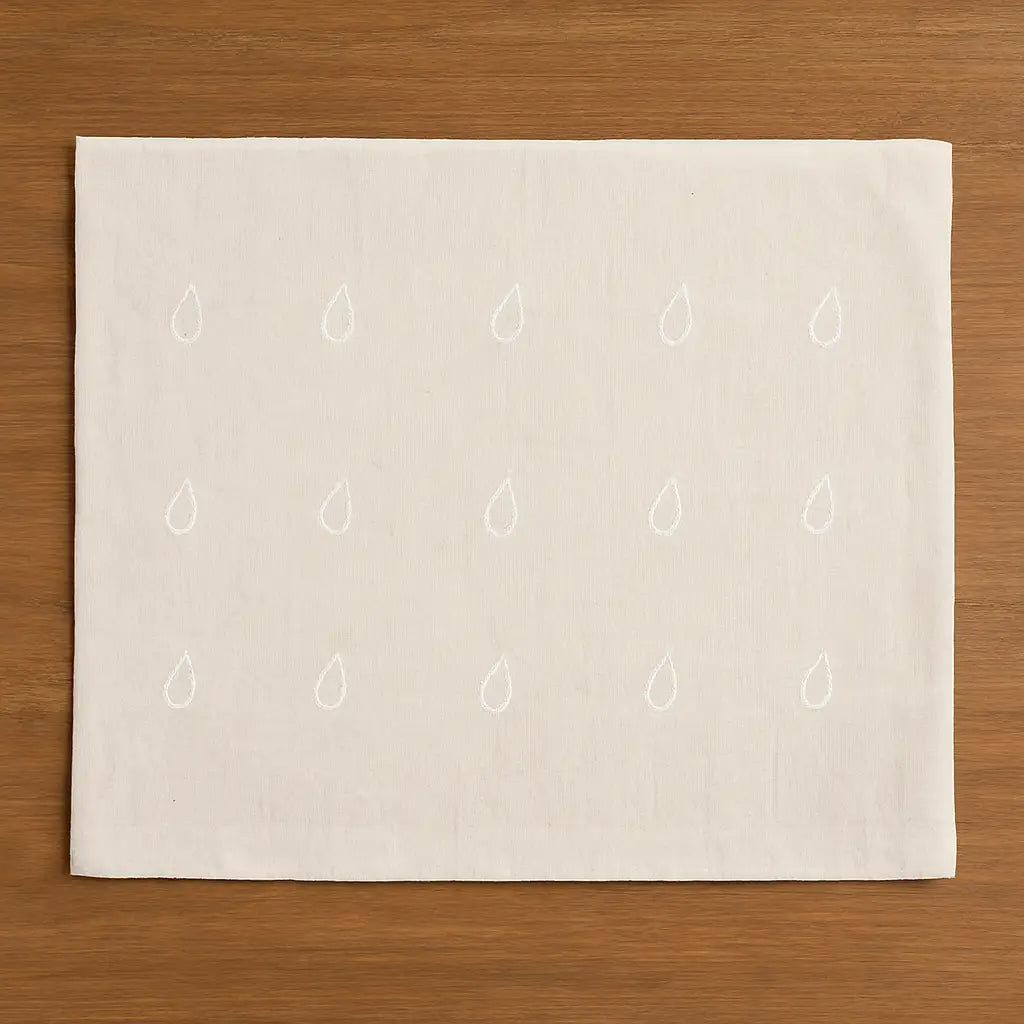
● Time for the running stitch
The running stitch forms the heart and soul of Kantha. It might sound or look simple, but when it is continuously repeated, the pattern becomes divine. Some variants of the stitch like loop or satin stitches, may also be used to enhance detailing.

● Stitches that empower rural women
If you're wondering how Kantha embroidery empowers rural women, allow us to tell you that the Kantha art of Bengal has been practiced and perfected by generations of women who were once silenced but are now celebrated artists. These women don't just make quilts and garments but reclaim their life and spin survival stories in the most beautiful manner.
Interesting Facts: About Bengal Kantha Embroidery
Take a look at these riveting facts that celebrate Kantha embroidery;
● The first Kantha embroidery factory was set up far from Bengal in Pune in the 1920s.
● One of the most magical elements of the Nakshi Kantha embroidery is that it is visible on both sides of the fabric.
● Each Kantha motif tells stories of love, dreams, and spirituality.
● This age-old embroidery has always been a women-led revolution, and it has empowered rural women to become self-reliant.
Is Kantha Embroidery Sustainable?
The Kantha Art of Bengal is a beautiful embodiment of sustainable fashion. Born from the wisdom of upcycling and mindfully making, Kantha's stitch history is all about transforming discarded fabrics into treasured pieces.
Farah Khan, Founder of Kantha by Farah Khan
“Hundreds of Kantha artisans were able to sustain their households, hone their skills, and take pride in their craft.”
Neetu, Senior Artisan, Anchal Project
“I know that I will never be able to travel the world, but now my name will!”
Ekta Kaul, Textile Scholar:
“A tradition rooted in storytelling and upcycling.”
How iTokri Is Helping In Preserving the Original Bengal Kantha
Our passion lies in putting forth the Kantha art of Bengal not just as a textile but a symbol of India's living artistic heritage. By connecting Indian and global audiences with the cultural significance of Bengal Kantha embroidery, we honor not just the history and meaning behind the Kantha stitch, but also the hands that bring it to life:
Kantha Fabric
Our Bengal Kantha embroidery fabrics hold the story behind generations of Kantha motifs that are stitched by rural women who pass down their art from generation to generation. No matter if you are a designer who has a penchant for conscious fashion, or a dreamer, Kantha style fabrics are where tradition meets creative freedom.
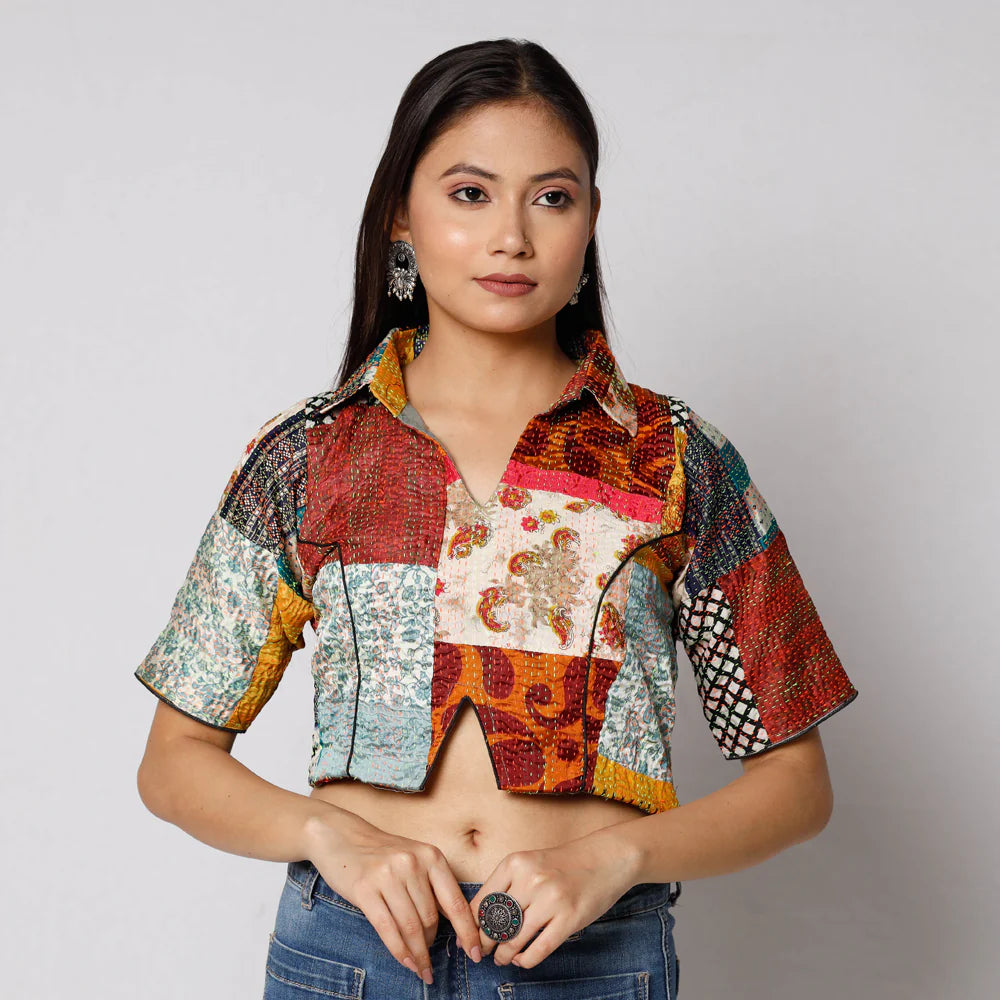
Kantha Stitch Blouse
Our Kantha stitch blouses are made from heritage fabrics and enhanced with the beauty of Nakshi Kantha embroidery to bring forth a curated range of modern Kantha styles. From sarees and skirts to your favourite jeans, our Kantha stitch blouses can be paired with everything.
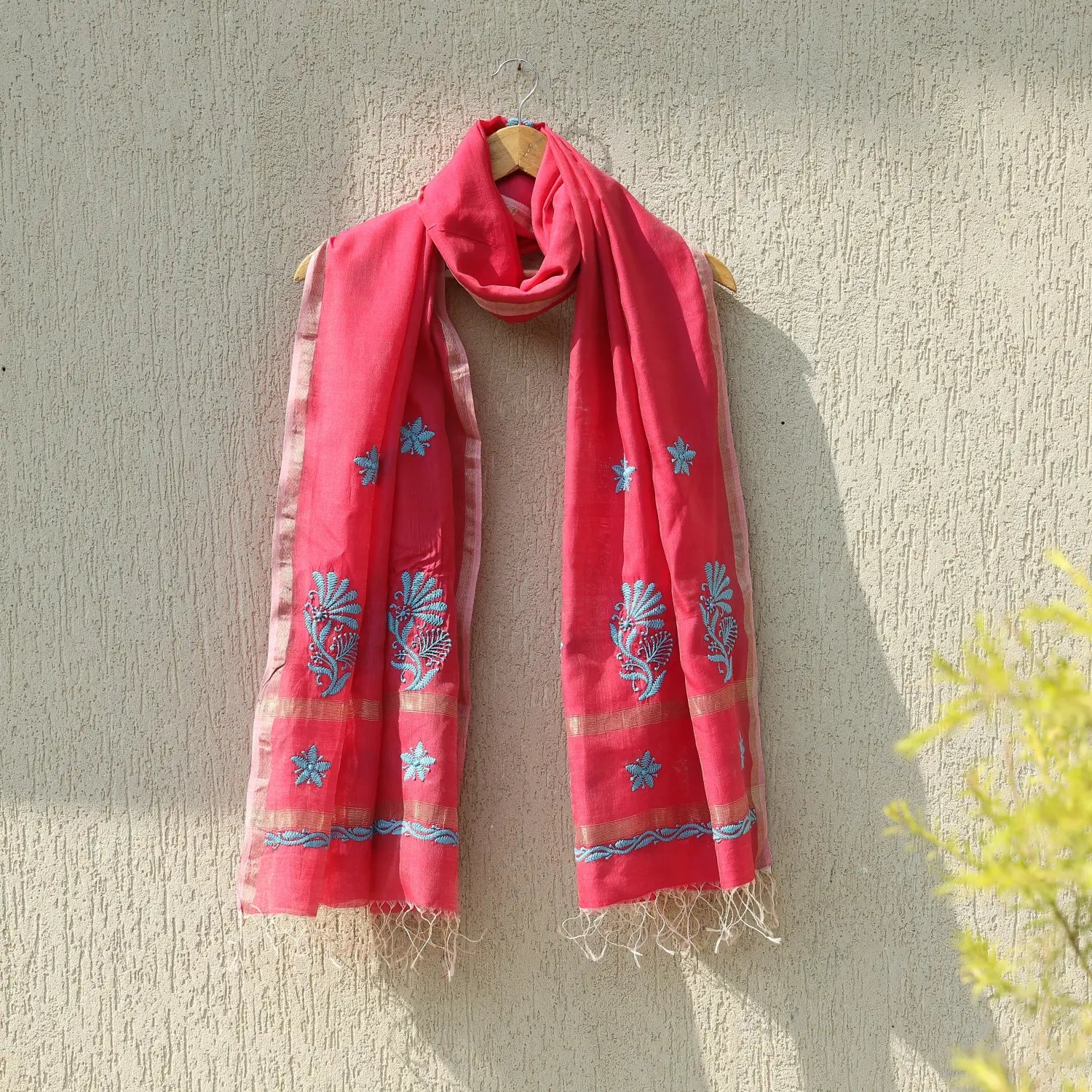
Kantha Work Dupatta
Our Kantha work dupattas echo the Kantha stitch history of Bengal, which have motifs symbolising the charm of womanhood. These kantha dupattas are perfect for elevating the charm of any outfit.

Kantha Work Stoles
Kantha work stoles blend the beauty of Indian heritage and chic style, making them subtle yet fashionably striking. From office wear to casual outings, these stoles can make any outfit look stunning!
Future and Survival of the Bengal Kantha Embroidery Handicraft
In today’s modern world, there is a great demand for Kantha Embroidery in the textile industry and the latest fashion trends. There is a large industrial manufacturing of indian handicrafts, the products and is a major source of income for those from the originating and neighbouring villages that practice this.
A study shows that there is a level of entrepreneurial expertise that is inbuilt in men and mainly women who have been practising this art for generations.
Frequently Asked Questions
What is the Kantha embroidery?
In India, there are many forms of threadwork available and kantha is one of them. Also known as Bengal kantha embroidery, this is a simple form of threadwork. In this embroidery form, women use a running stitch style for creating traditional motifs. Popular among rural women from Orissa and Bengal, Kantha is a way to revive old fabrics. These rural women repurpose old clothes in the form of quilts adding prints on them. Kantha means a fabric or quilt. However, this sustainable art is now making its way into mainstream fashion.
Which state is famous for Kantha embroidery?
Kantha, also known as Kanta or Qanta originated in Bengal, India. This centuries-old art now prevails in Orissa and West Bengal which were part of the Bengali region. Over here you can get authentic kantha embroidery. Some of the popular styles of Kanta embroidery designs are Sujani, Baiton, Chatai, Lep and Nakshi. This distinctive running stitch is known for its simple yet captivating look. Local women use old fabrics and running stitches to repurpose them. Kantha threadwork is sustainable fashion in the true sense. This art is a significant part of Bengali and Oriya culture.
What materials are traditionally used in Kantha embroidery?
Bengal Kantha Embroidery uses upcycled cotton sarees, dhotis, bedsheets, cotton or Tussar silk threads, etc. The beauty of sustainable fashion using Kantha Embroidery is simply too good to behold.
What is the meaning of the word "Kantha"?
Kantha means patched cloth. It has its origins in the idea of layering and mending hand-stitched kantha quilts, which turned old fabrics into art.
What are the primary stitches used in Kantha work?
The signature Kantha stitch is a simple running stitch that ties together pieces. Variants like lobe, satin, and Nakshi Kantha embroidery are used to add nuance and texture to the embroidery.
What kind of motifs and designs are commonly found in Kantha embroidery?
Kantha motifs and their symbolism draw inspiration from lotuses, birds, fish, mythology, folklore, etc.
What are some of the products made using Kantha work?
Kantha work is used to make jackets, sides, stools, blouses, cushions, stools, home décor, etc. There are so many things available in the market that seriously blend traditional vs modern Kantha styles.
How old is the tradition of Kantha embroidery?
Indian textile heritage and Kantha stitch history dates back almost 500 years.
How does Kantha work differ from other embroidery styles in India?
Kantha embroidery is double-sided, very aesthetic to look at, and symbolically rich. Its beauty is a testament to why Kantha embroidery is more than just a craft.
Is Kantha work still practised today, and if so, where?
It is no secret that Kantha embroidery empowers rural women. It is an age-old tradition that has been passed down and honed through generations.
Can Kantha work be done by machine, or is it exclusively hand-crafted?
True Bengal Kantha embroidery is always hand-stitched. Although machine-made replicas are there, but they lack the soul of original Kantha work.
What are some regional variations of Kantha embroidery?
Some regional variations of Kantha embroidery are Sujani Kantha, Bodhana Kantha, Lep Kantha, etc. Each regional style has its own unique traditions, patterns, and motifs.
How has Kantha embroidery evolved over time?
From humble quilts to sustainable couture; modern Kantha embroidery styles include jackets, stoles, dupattas, and so much more.
What is Nakshi Kantha?
Nakshi Kantha embroidery is done using floral, animal, and mythic patterns that celebrate storytelling through a precise use of needle and thread.
How do artisans create the patterns and designs in Kantha work?
Hand-stitched Kantha quilts from Bengal or other forms of Kantha craft are sketched onto layered cloth. After that, running, loop or satin stitches are used to create every figure, motif or design.
Popular Blogs
Leheriya tie-dye techniques | Ajrakh print origin in India | Types of Bandhani patterns and their symbolism | Traditional Sanganeri printing technique | Custom Handmade Stitched Outfits | How to choose fabric | Difference between linen and cotton fabric | GI tag handcrafts in India | Best colour combination for saree


Leave a comment (all fields required)