
 Verified Purchase





Handmade, Handcrafted Handloom Sarees
Use filters to navigate between various crafts


Exclusive Block Print Sarees – Pure Handcrafted Art
Block Print Sarees – A Blend of Comfort & Style


The World Saree Day honours one of India’s most beloved garments - the saree. Observed annually on December 21st, this day is for celebrating the six yards of woven fabric that’s rooted in tradition, craft, and artistry. Today, the saree is not just a garment; it is an identity of the rich heritage of the land.
World Saree Day serves as a reminder to slow down, take a closer look, and value the many hands that go into creating an authentic saree in an era of fast fashion and fads.

When is World Saree Day Celebrated?
Since 2020, World Saree Day has been celebrated annually on the 21st of December. It started with the attempts of Indian journalists Sindhura Kaviti and Nistula Hebbar, who honored not just the heritage of the saree but also celebrated the weavers and various artisan communities in India.
December 21st marks the winter solstice, symbolizing warmth, continuity, and traditions. The idea behind World Saree Day was to encourage people to take up Indian textiles and encourage communities that keep the heritage alive.
What started as a social media movement has now become a meaningful reminder of India’s textile legacy. Today, World Saree Day is recognized globally and often celebrated by the Indian diaspora, promoting the saree as a symbol of cultural heritage. In India, we often see special celebrations in cities known for their textiles, like Surat, Nagpur, Mysore, and more.
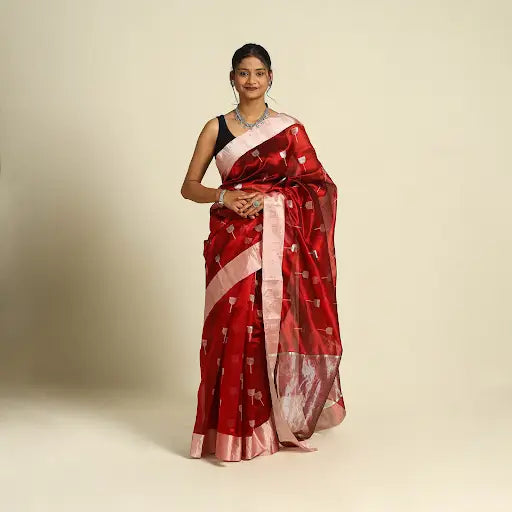
The Saree - A Liquid Drape More Than a Garment
Deeply rooted in Indian history, the origin of the saree can be traced back to the Indus Valley Civilization around 2800-1800 B.C. The saree is one of the oldest unstitched garments still worn today. From ancient sculptures to royal portraits, the saree has remained relevant across centuries in this land. The saree's liquid drape is versatile, and women in Southeast Asian countries are often seen wearing it for special occasions.
A saree can be festive, formal, everyday, or ceremonial - depending on how it is woven, worn, and styled.
Each region of India has its own saree tradition and is known for its unique handicrafts
● Banarasi sarees from Uttar Pradesh with rich brocades
● Kanjeevaram silks from Tamil Nadu are known for their strength and shine
● Jamdani from Bengal with delicate handwoven motifs
● Sambalpuri and Bomkai sarees from Odisha with symbolic designs
● Paithani from Maharashtra with vibrant colours and peacock motifs
● Kalamkari Sarees from Andhra and Telangana with exquisite hand-painting
These authentic Indian sarees are not mass-produced. They are made slowly, patiently, often taking weeks or even months to complete.
Relevance of Saree in Modern Times
Even with Western fashion becoming more common, the saree continues to be the most preferred choice when it comes to festivals, weddings, and formal events. Many still enjoy crisp cotton sarees as everyday wear in the tropical climate of India.
Beyond the region, the saree has earned global attention as a mark of grace and cultural expression. Designers today are giving it a fresh voice by pairing traditional weaves with modern silhouettes and styling. With celebrities and influencers wearing sarees on international stages, the liquid drape of a saree continues to find new audiences and renewed appreciation worldwide.
Choose Authentic Indian Saree Over Cheap Imitations
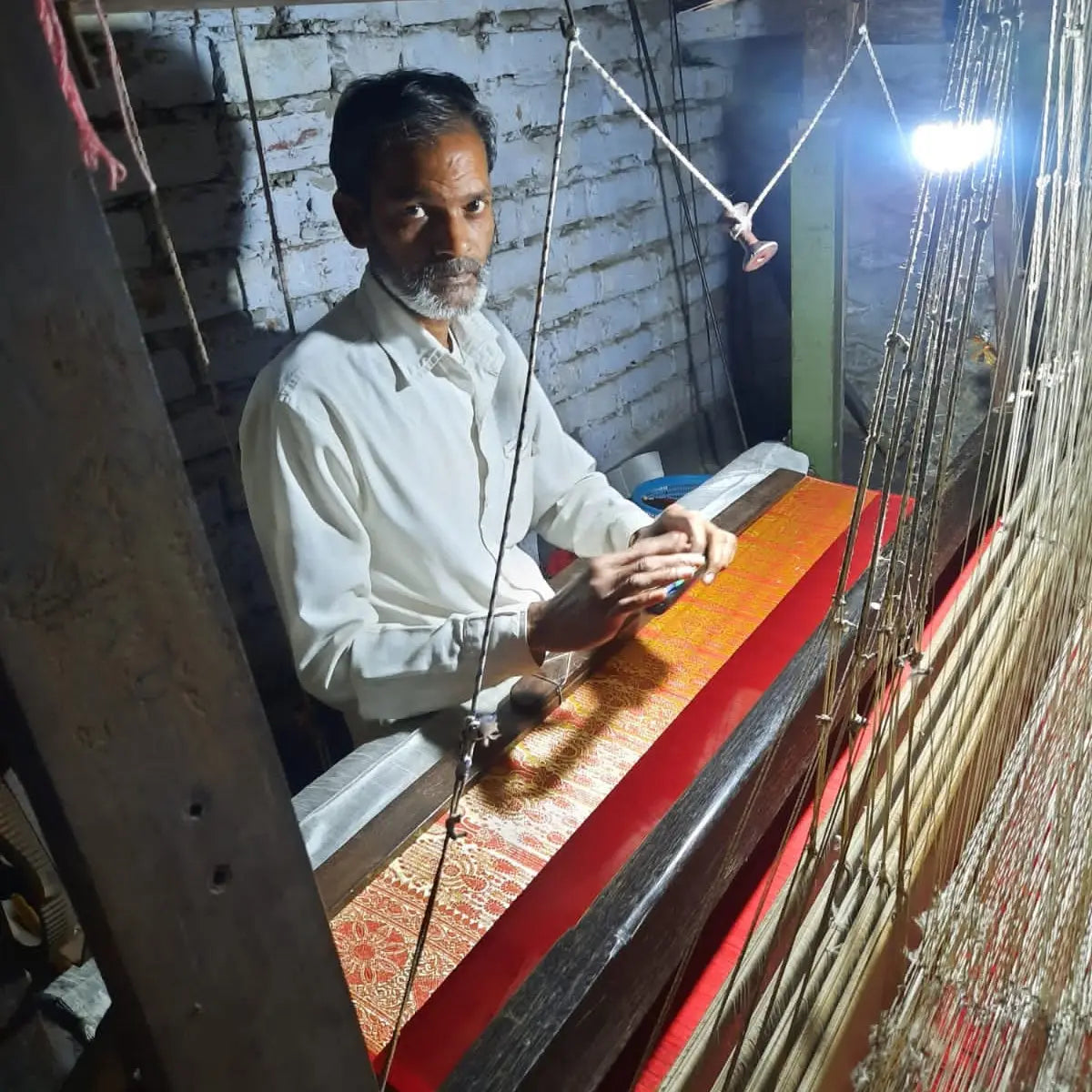
Authentic Indian sarees are meant for slow fashion. Weavers spend years learning their craft. Many work on traditional looms set up in their homes or small workshops, bringing you a handcrafted saree, far superior to any machine-made, cheap imitation. A single mistake in the handloom can mean starting all over again.
Yet, despite the skill involved, many artisans struggle with loss of craft literacy to cheap imitations. Cheap machine-made imitations flood the market, often sold under the same names as handloom sarees. This makes it difficult for genuine weavers to compete.
World Saree Day is a chance to understand this difference and choose mindfully.
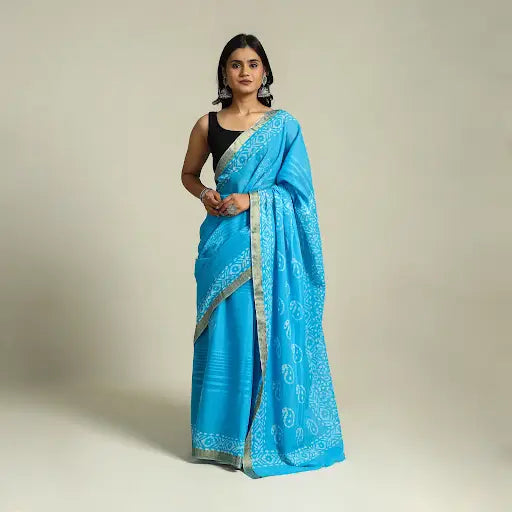
What to Do on World Saree Day
On this World Saree Day on 21st December, celebrate the six yards of wonder with a purpose.
1. Celebrate - Pick a handcrafted, authentic saree and flaunt it at work or a casual do.
2. Share - Promote the saree as a cultural symbol, post a photo on Social Media.
3. Encourage Artisans - Instead of buying many inexpensive sarees, invest in one well-made piece. A good hand-woven saree lasts for years and often becomes an heirloom. Buy from iTokri, which works directly with weavers and craftspeople.
iTokri Championing the Weavers' Communities in India
At iTokri, we work directly with weavers - no middle layers, no dilution of value. The price reflects time, skill, and material honesty. Our philosophy has always been to bring authentic Indian crafts to consumers directly from the artisans without any middlemen. This ensures the weavers get the worth of their effort, always.
Our skilled weaver communities across India give us the confidence to bring these handcrafted products to you globally.
World Saree Day is More Than A Day Dedicated to Saree
Today, sarees are being styled in new and interesting ways. Younger generations are pairing sarees with jackets, belts, and sneakers to create fusion looks. This modern approach keeps the saree relevant without losing its essence. World Saree Day is not about wearing sarees in a “traditional” way only. It’s about making the saree part of everyday life again. It is always a good idea to learn about different saree crafts and their origins to experience the true heritage of the land and artistry.
Wear a saree with pride, because iTokri ensures you get an authentic Indian saree direct from the weaver.


Leave a comment (all fields required)