
 Verified Purchase





5 Rare Indian Embroideries That Are Slowly Disappearing
The Indian textile story is much more than just fabrics. It tells tales about the hands crafting fabric, the patience in each craft, and the quiet passing down of skills from one generation to another within communities. Yet, many forms of traditional Indian embroidery are fading into the background.
Due to the increasing popularity of fast fashion, machine-made replicas, and a lack of awareness, these age-old fabric techniques are pushed to the brink of extinction. These disappearing Indian embroideries are not just craft, but living histories. And they deserve to be remembered, worn, loved and valued.
Here at iTokri, we believe in celebrating these crafts and telling their stories before they vanish completely. Let’s take a closer look at five embroidery traditions that were popular and flourished in India, but now these fabric artworks need our attention more than ever.
What are Some Rare Indian Embroideries?
India is blessed with beautiful fabric artworks and an Indian embroidery heritage. You can find one in every corner of this country. However, certain rare embroideries are practised by small artisan communities with a limited number of artisans who know the art. These embroideries are deeply associated with their local culture, rituals and daily life.
Many of them are time-intensive, made entirely by hand and difficult to replicate through machines. All these reasons make them vulnerable in today’s fast-moving markets.
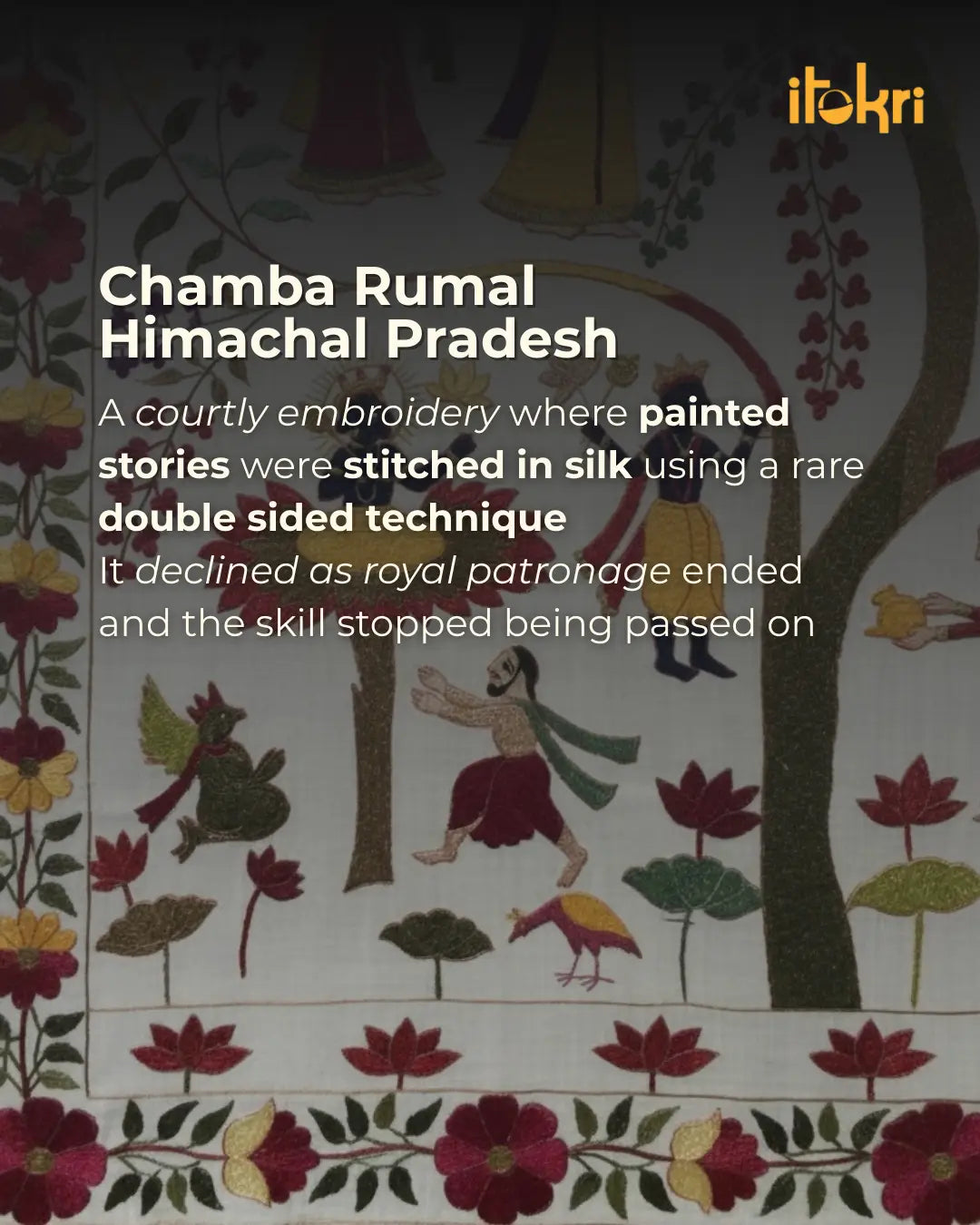
Chamba Rumal from Himachal Pradesh
Chamba rumal is a delicate embroidery tradition from Himachal Pradesh. Here, artisans use needlework to mirror miniature paintings. It is crafted on fine handwoven fabric using a double-sided stitch. This creates an identical design on both sides. It was once part of weddings and ritual gifting. Despite its cultural richness and precision, now very few artisans create Chamba rumal.
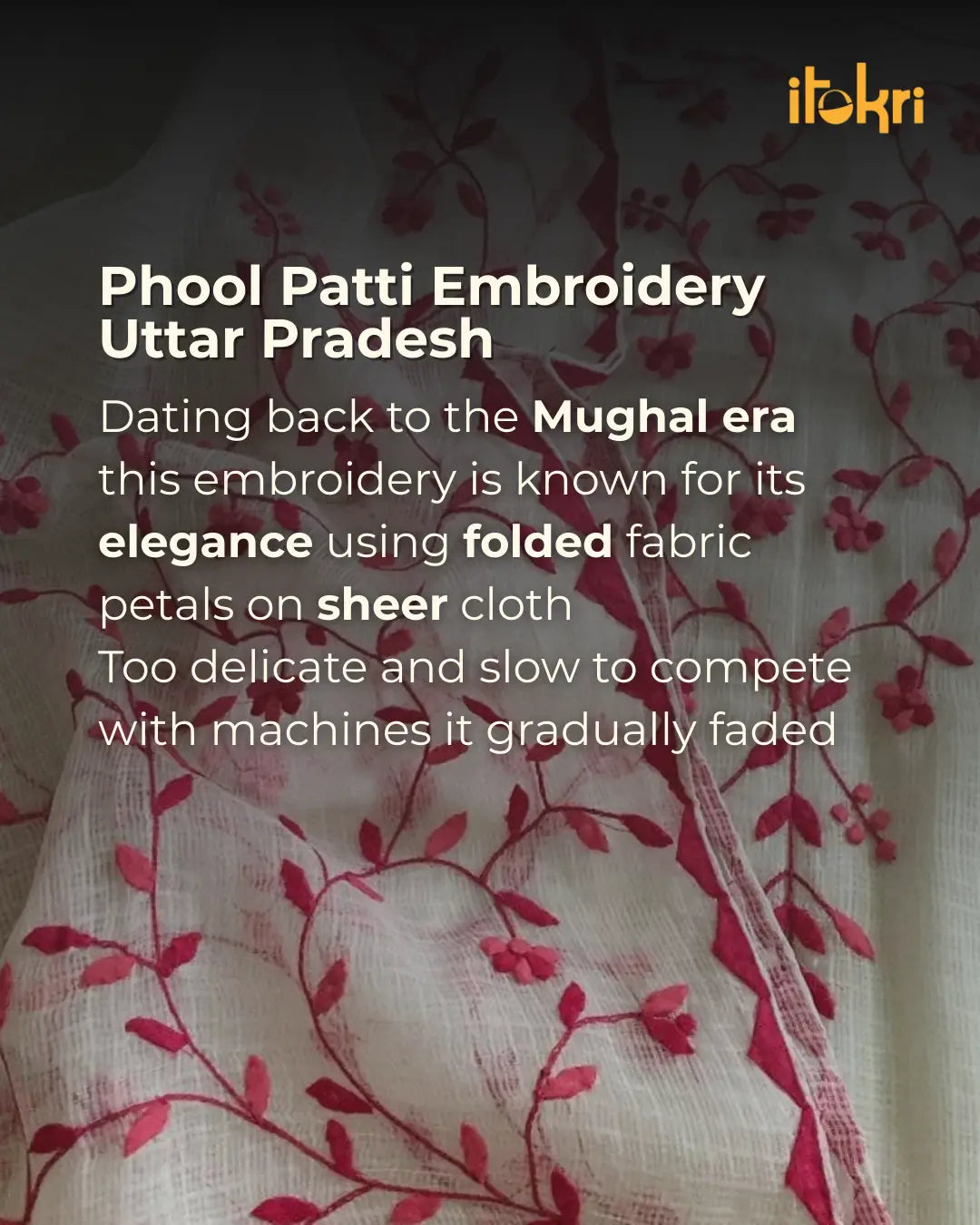
Phool Patti Embroidery from Uttar Pradesh
Phool Patti embroidery is popular for its soft floral motifs and originated in Uttar Pradesh. Here, artisans create these motifs by folding and stitching fabric, setting it apart from surface embroidery. It is traditionally used on festive wear and bridal wear for its subtle elegance. This gentle craft is struggling due to machine embellishments replacing it, and only a handful of skilled makers are now working on these.
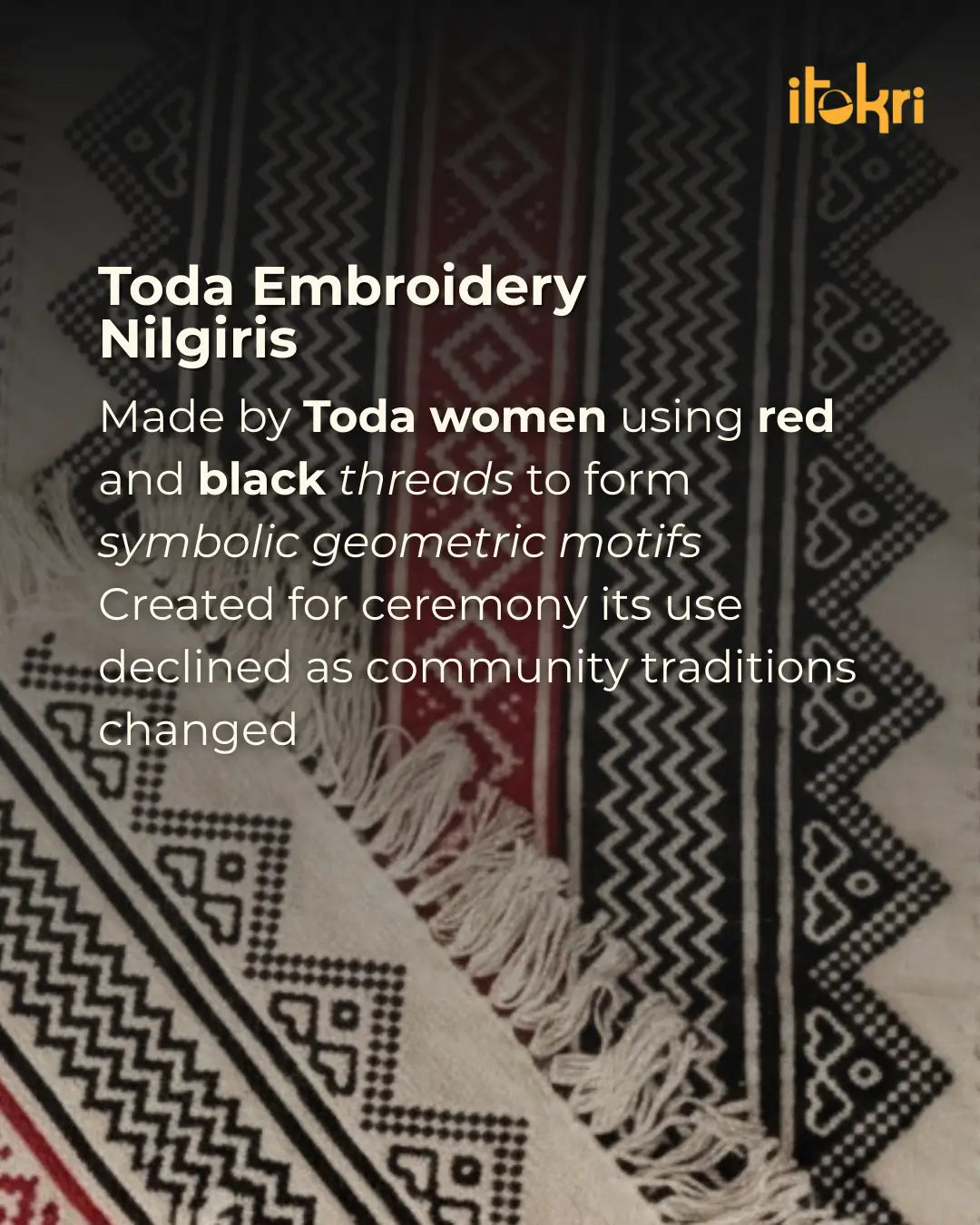
Toda Embroidery from the Nilgiris
Toda embroidery is practised by the Toda tribal community from the Nilgiris, reflecting their culture, rituals and their relation with nature. They create bold geometric patterns using red and black threads stitched onto handwoven cotton. Toda embroidery is a powerful example of heritage embroidery of India, where craft and a community’s identity are inseparable.
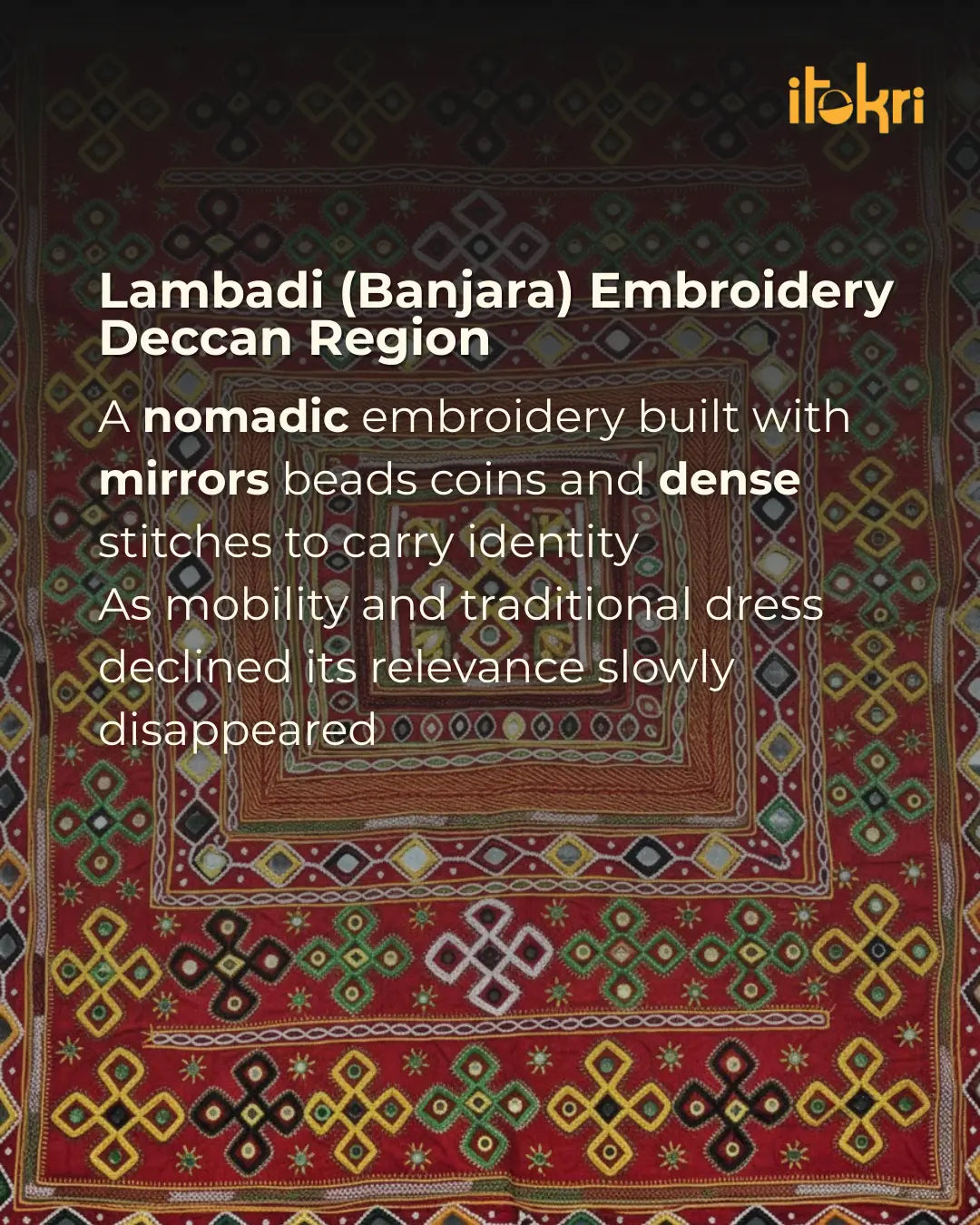
Lambadi Embroidery from the Deccan Region
Lambadi embroidery from the Deccan region is known for its vibrant, textured and expressive motifs. Also known as Lambani embroidery, it features mirrors, shells, coins and bold stitches. Traditionally, it is worn by nomadic banjara communities in the Deccan region, telling a story of their travel and resilience. It gets its name from the community itself and is truly vibrant. However, this tribal style has become diluted due to mass-produced designs losing their authenticity. Now, a very few people create them, limiting it to the tribes only.
Kasuti Embroidery from Karnataka
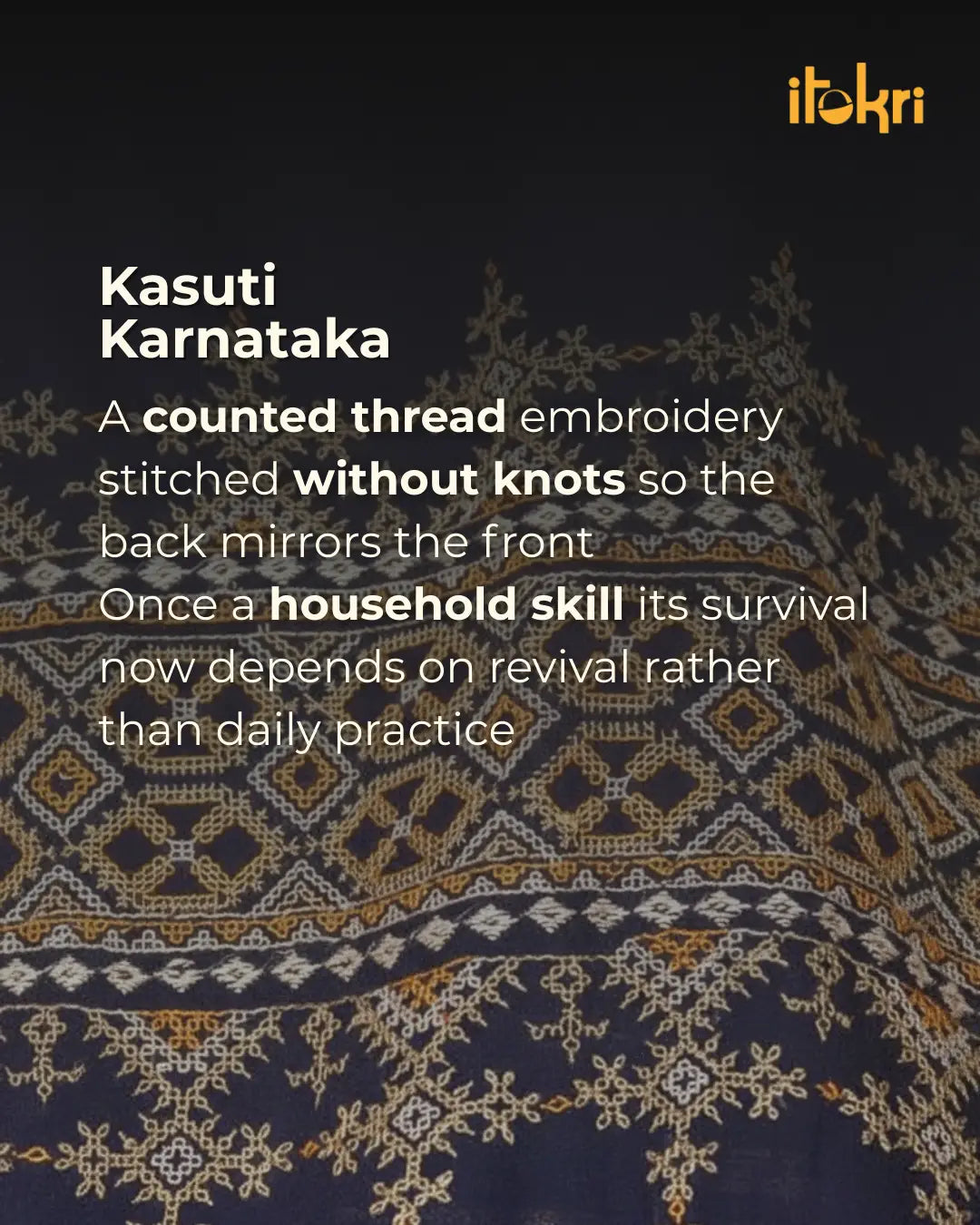
Inspired by the temple architecture and daily life motifs, Kasuti is a meticulous form of embroidery. Here, artisans follow a strict pattern count for crafting the motifs with fine symmetry and detailed storytelling. Kasuti embroidery represents the depth of Indian embroidery heritage, yet only a few artisans practice it today since it is time-consuming.
Conclusion
These embroidery crafts are much more than mere decorative techniques. They are cultural heritage; memories stitched into fabric. By opting for these handmade pieces and learning the stories behind them, you can help in preserving handcrafted embroidery in India, which is still being made quietly by artisans. At iTokri, every embroidered piece carries the soul of its maker.
With these, you have a chance to wear and share these rare traditions before they fade away completely. By opting for these hand-embroidered dress materials over mass-produced fabrics, you not only help the environment but also revive an art form which is on the brink of extinction. They are not fashion, but a piece of living heritage.


Leave a comment (all fields required)