
 Verified Purchase





When we think of evergreen global fashion trends, names like cashmere shawls, paisley bandanas and madras checks instantly come to our mind. But here’s the twist, many of these so-called “international” fabrics began their journey in India, especially the Scandinavian scarf!
Surprised? Most people are, even Indians!
The story of Indian textiles is more than a thousand years old. Skilled artisans shaped it through weaving traditions and ancient trade routes. Even before fashion houses existed or these Indian fabrics became a fashion trend, they were part of our culture. Indian handloom clusters were crafting them quietly in villages, using natural fabrics and dyes. Indian textile heritage is deeply rooted in handmade textiles, Indian craftsmanship, and sustainable Indian fabrics, with one-of-a-kind weaves.
Today, we will uncover five iconic regional Indian weaves from a vast range that are loved across the globe but are rarely credited to India.
The Untold Story Of 5 Indian Textiles Loved Worldwide
Although many fabrics and weaves from India are part of international fashion trends, these 5 have always been loved and included in daily fashion wear. But hardly anyone knows that they belong to India. Let’s have a look at the handmade Indian fabrics whose stories lead straight back to India’s handloom heartlands.
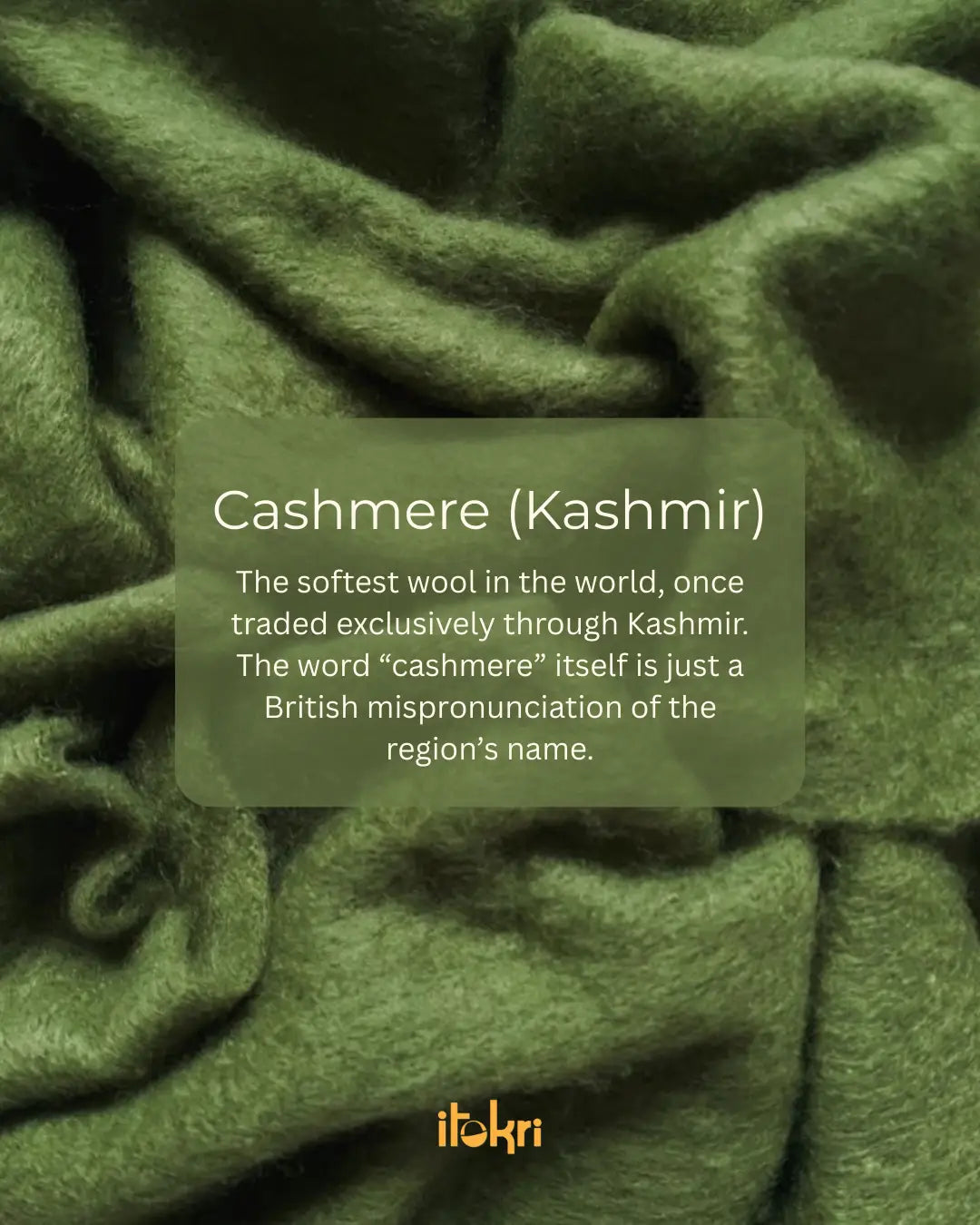
Cashmere: Born in the valleys of Kashmir
Though it is associated with European winter fashion, the origin of cashmere lies in the Himalayan region of Kashmir. This fabric is made with an ultra-soft undercoat of the Changthangi goat. Also known as pashm in the local language or pashmina, it is hand-spun and hand-woven by local Kashmiri artisans.
India exported these luxurious shawls to Persia, France and royal courts across Europe for centuries. What makes cashmere fabric unique is the painstaking craftsmanship that goes into making it. From combing the fibres to weaving impossibly fine yarn makes it one of the best heritage fabrics. Each pashmina or cashmere shawl is a true symbol of handloom mastery, warmth and rare softness.
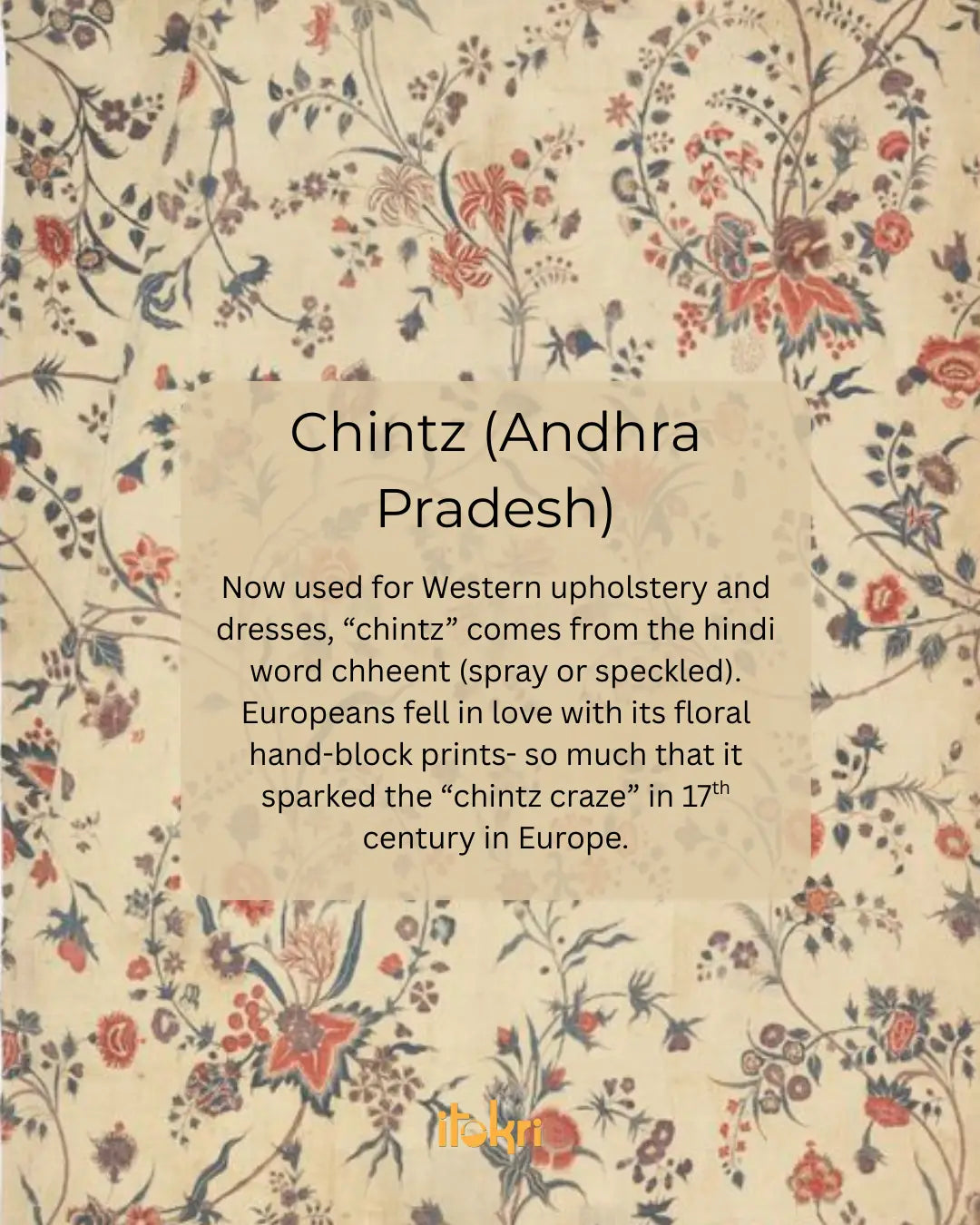
Chintz: India’s first global fashion phenomenon
If you have seen vintage dresses with floral prints, there is a high chance that it was chintz, a textile originally hand-painted and block-printed in India. During the 17th century, this fabric, hailing from Andhra Pradesh and Gujarat, took Europe by storm. It was so popular that France and England banned it to protect local industries.
Traditionally, Indian chintz was made with dyeing-resist techniques and wooden blocks, creating vibrant florals and vines. It was durable and beautiful, making it a favourite among traditional Indian crafts.
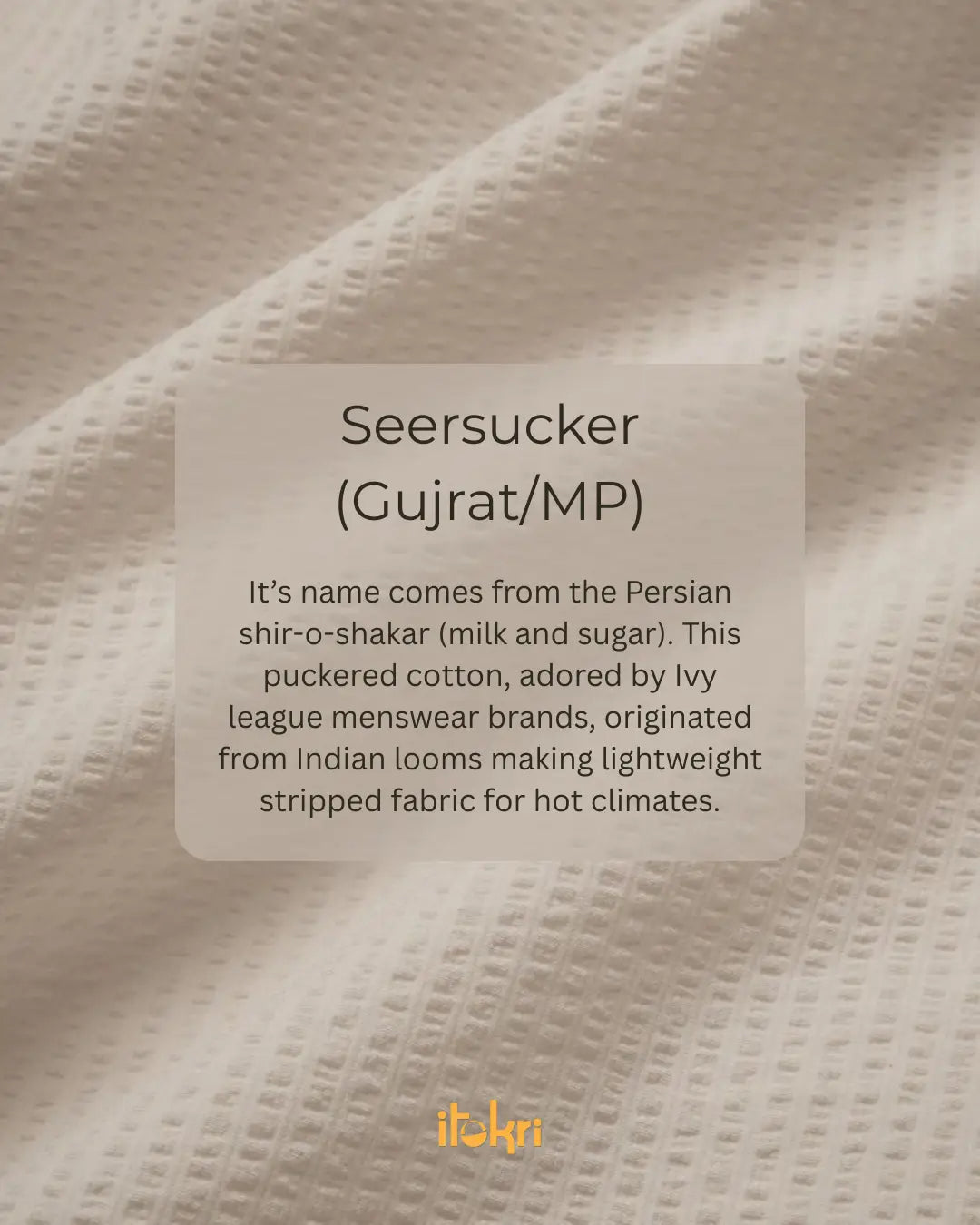
Seersucker: A summer fabric with Indian roots
That breezy, puckered summer fabric known as seersucker? Well, it is Indian too. It got its name from the Persian phrase, shir-o-shakar (milk and sugar). Indian weavers perfected the technique of slack-tension weaving, creating lightweight cotton fabric with the signature alternating smooth and crinkled stripes.
British colonists loved it for its cooling and breathable properties and carried it to the West. Although this Indian handloom is now a classic in shirts, dresses and children’s clothing, it will always remain Indian, inspired by local weaving knowledge and climate-wise design.
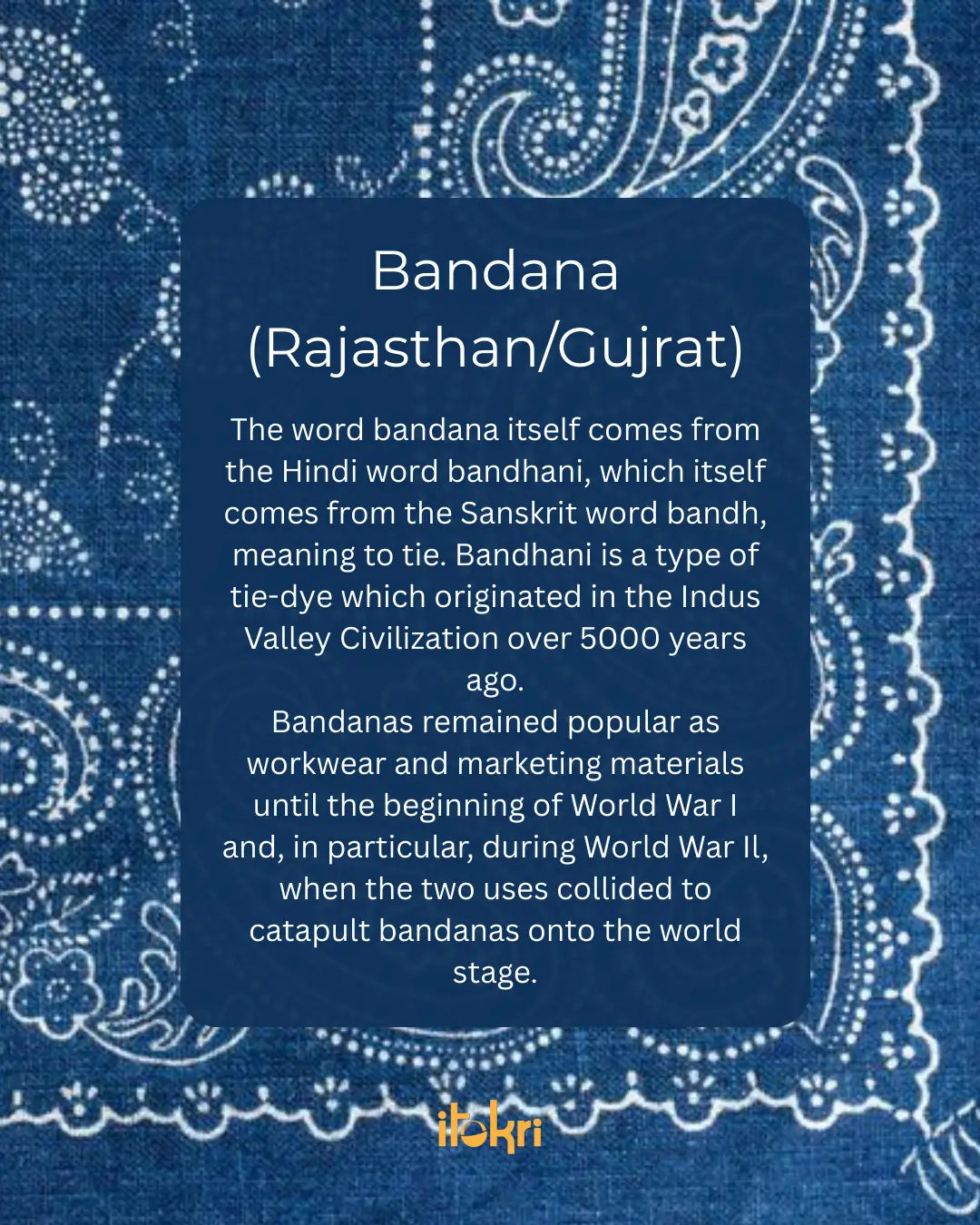
Bandana: The global accessory that began in India
The word bandana comes from the Sanskrit “bandhna”, referring to tie-dye techniques used in Rajasthan and Gujarat. During the 18th century, a large quantity of Indian bandhani-dyed fabrics was exported. And these evolved as the iconic red-white or navy paisley bandanas we know today.
These were made popular by cowboys and labourers in the American West in the 19th century. Bandhani is one of the most popular sustainable textiles in India. This has now become a global cultural symbol, worn by rockstars, bikers and artists. But its roots? Pure Indian artistry!
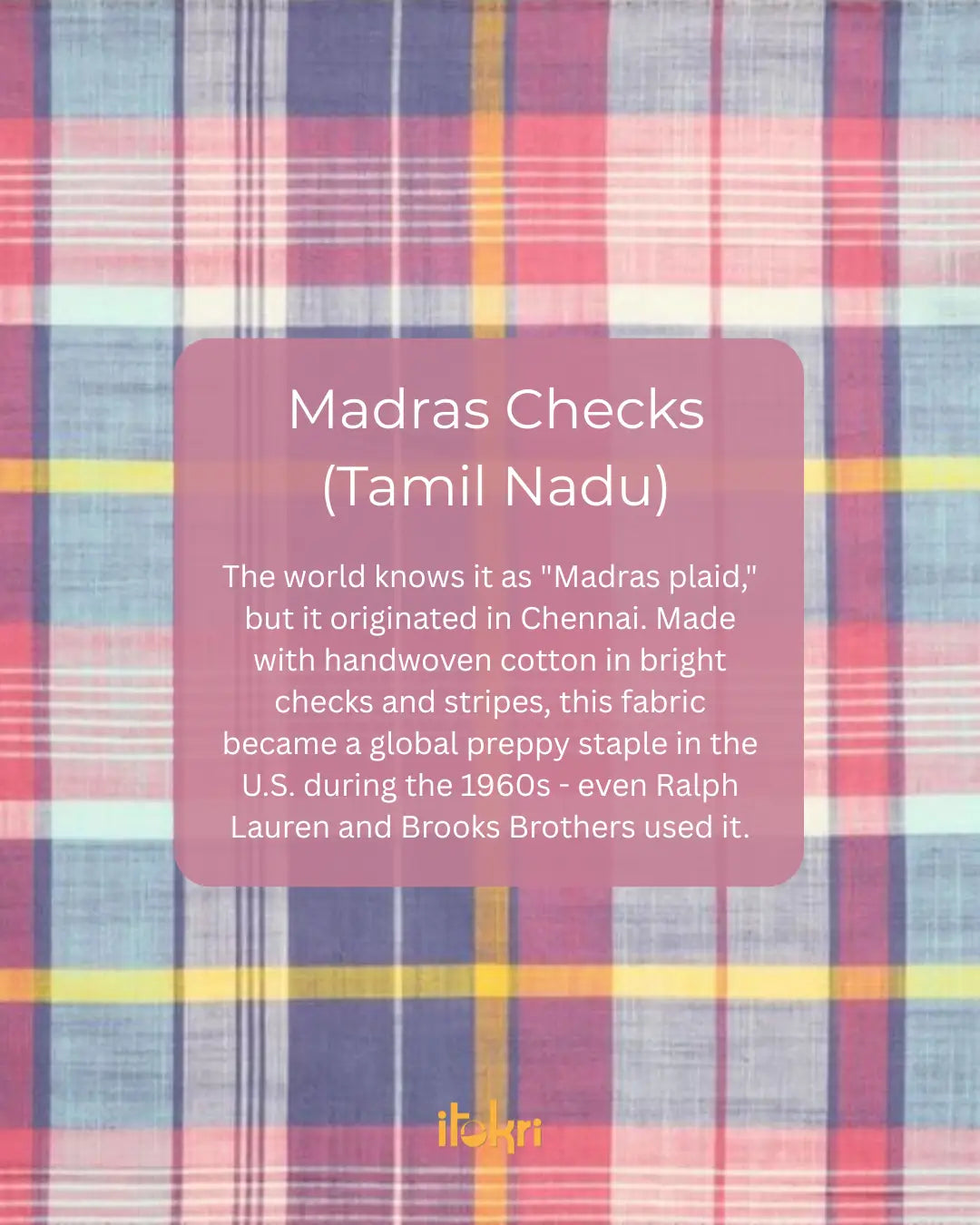
Madras Checks: The fabric that built a legacy
The history of the beloved Madras check shirt runs straight to Tamil Nadu. It was originally known as Madras Cloth. It is a lightweight, hand-woven cotton fabric coloured with vegetable dyes, with distinct plaids and checks. During the 1960s, it was popularised by American fashion brands, turning Madras checks into a preppy essential.
It is still woven by handloom artisans in India on traditional wooden looms, thread by thread. It is one of the most popular Indian textiles, vibrant, breathable, sustainable and globally loved.
Conclusion
India’s influence on global textiles is far greater than most people realise. The world recognises these fabrics as fashion staples, but often forgets the hard work of Indian weavers, dyers and artisans behind them. iTokri brings you closer to the source, offering authentic Indian fabrics, artisanal fabrics and heritage handlooms. From chintz-inspired prints to ajrakh, ikat, madras cotton, and hundreds of rare craft fabrics, you will find the best collection in just one place. Explore the world of real Indian craftsmanship at iTokri.


Leave a comment (all fields required)